Skip to content Skip to footer
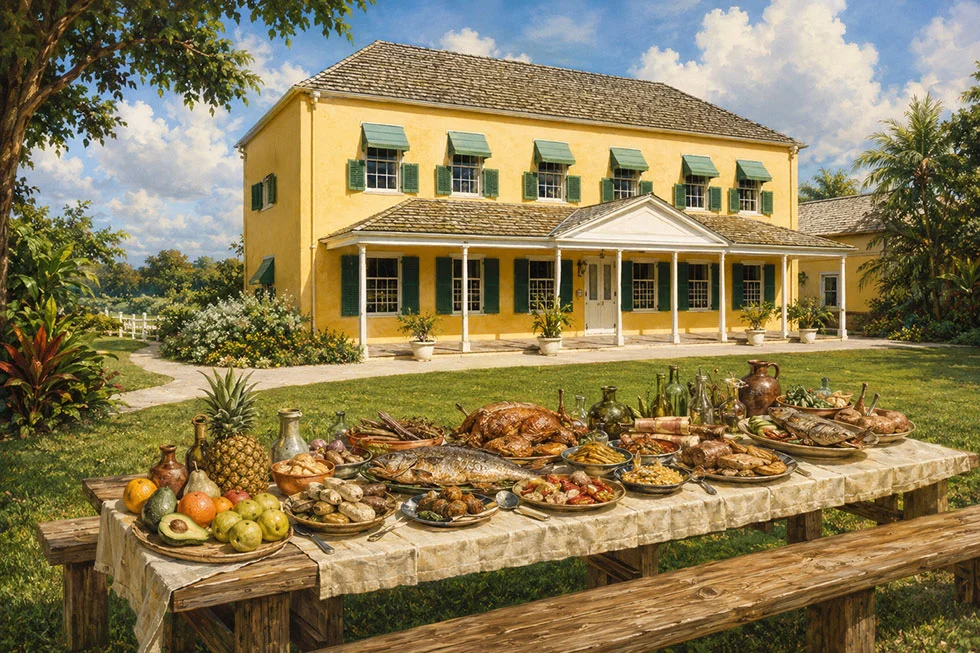
Classic illustration of a large outdoor banquet table with 1751 Barbadian foods on the lawn of George Washington House in Barbados.

What Was Food Like in Barbados in the 1700’s? A Taste of George Washington’s Visit in 1751

In 1751, people in Barbados typically ate a mix of fish, salted fish, meat, plantains, yams, cassava, eddoes, grains, vegetables, and tropical fruits such as pineapple and oranges

Diet varied greatly by wealth and social status: wealthy households could enjoy fresh meats, seafood, imported wine, spices, and other luxury foods, while enslaved Barbadians relied more heavily on ground provisions, grains, plantains, and fish. George Washington himself recorded enjoying several tropical fruits during his 1751 visit, especially pineapple. Read on to learn more about the Barbadian and colonial diets in the 18th century!

When 19-year-old George Washington arrived in Barbados in November 1751, he was entering a world that looked, smelled, and tasted very different from the Virginia he knew. Today, George Washington House Barbados preserves the story of that remarkable visit. Washington stayed at the 18th-century home in Bridgetown with his older half-brother, Lawrence, during what would become his only journey outside the mainland colonies of North America.

Washington’s surviving diary offers a personal glimpse into the Barbados he encountered, including its tropical fruits and social gatherings. But his experience represented only one side of life on the island. Food in Barbados in 1751 varied significantly depending on wealth, occupation, and place within Barbados’s colonial society.

Much of the island’s food came from local farms and waters, while wealthier households could supplement those foods with imported goods. George and Lawrence’s hosts might enjoy elaborate meals and abundant fruit, while soldiers, free working families, and enslaved people had very different tables.

George Washington’s Taste of Barbados

Classic illustration of 18th-century Barbados fruits and root vegetables arranged around a pineapple on a table in a sugarcane field.Washington’s Barbados diary offers several firsthand observations about the island’s food, particularly its tropical fruit. While his entries do not document every meal, they reveal some of the foods that caught his attention during his stay.

Washington mentioned the “China Orange” and avocado, along with pears and other fruits. But the pineapple clearly made the strongest impression. He noted that the pear was “generally most admired,” but added that “none pleases my taste as do’s the Pine.” 

Pineapples were still an exotic and relatively costly delicacy in the 18th century, often associated with hospitality and status. For Washington, the abundance of tropical fruit was another clear reminder that Barbados was very different from Virginia.

Classic illustration of young George Washington and Lawrence Washington dining in the George Washington House Barbados with a table set with 18th-century Barbadian foods.

What Might George and Lawrence Have Eaten?

Because Washington’s diary does not provide a complete menu, we cannot say exactly what he and Lawrence ate each day. We can, however, get a sense of their meals from the foods available to their hosts and the social circles they encountered.

As guests of prominent Barbadian residents, the brothers likely had access to both local foods and imported goods. Their meals could include:

  • Fresh meat, poultry, fish, and seafood
  • Root vegetables and other local produce
  • Tropical fruit
  • Imported wine, brandy, spices, and preserved foods

Everyday meals were likely simpler, while dinners with prominent residents or British officers could be more elaborate. Washington’s diary records dinners at the fort with British officers, offering a glimpse into the hospitality he experienced.

Food in Barbados in 1751: Different Tables 

Wealthy Plantation Households

Barbados’s wealthiest families could combine the island’s agricultural abundance with imported foods and luxury ingredients. Their tables might feature fresh meat, seafood, root vegetables, tropical fruit, sugar, and molasses alongside wine, brandy, and spices.

A good variety of food was imported from England, Scotland, New York, Pennsylvania, and the rest of the colonies, as well as from nearby islands such as Jamaica. 

Special occasions could bring an even greater variety of food and drink, reflecting both the wealth of the household and Barbados’s connections to the wider Atlantic world.

Free Working Families

Not everyone in Barbados lived in a plantation great house or worked in the fields. Bridgetown and the wider island were home to merchants, artisans, tradespeople, shopkeepers, and other free Barbadians.

Their diets varied by income, but local foods remained central. Fish, vegetables, root crops, fruit, grains, and other provisions could form the basis of everyday meals, while imported foods and better cuts of meat were more accessible to households with greater means.

British Soldiers

Washington’s visit also brought him into contact with the island’s military community. He attended dinners with British officers at the Garrison, but the everyday meals of ordinary soldiers were likely much more practical. 

Military provisions had to be transported and stored, making foods such as salted meat and fish particularly useful. Local produce could supplement those provisions when available. Rank mattered at the military table just as it did throughout Barbadian society.

Enslaved People

The greatest contrast was found among the island’s enslaved population. By 1751, slavery was fundamental to Barbados’s sugar economy, yet the people whose labor sustained that economy did not share equally in its wealth.

Their diets relied heavily on plant foods and ground provisions, including Guinea corn, plantains, yams, cassava, and eddoes. Salted fish and locally caught fish could provide important sources of protein, while provision grounds and gardens allowed some enslaved people to grow additional food for themselves.

Access varied by plantation and circumstance, but the fundamental difference was choice. Wealthy households could purchase food according to preference, while enslaved people lived within a system in which much of their food supply was controlled by the plantation.

A Taste of 1751

One way to understand everyday food in Barbados in 1751 is through the ingredients that were available. 

A simple meal could combine salt fish, plantain, cassava or yam, and vegetables, prepared with herbs and peppers. Those flavors can still be experienced today in dishes such as a historically inspired pepper pot.

Historically Inspired Pepper-Pot

Classic illustration of a 1700s Barbados pepper-pot with salt fish, plantain, cassava, onions, greens, and herbs in a cast iron pot.Ingredients:

  • Salt fish
  • Plantain
  • Yam or cassava
  • Greens or other vegetables
  • Onion
  • Hot pepper
  • Herbs
  • Water or stock

Preparation: Simmer the ingredients together until tender, adjusting the vegetables and seasonings to taste.

This is not a recipe we can definitively attribute to George Washington or an enslaved Barbadian household in 1751. It is a modern interpretation built around ingredients associated with Caribbean foodways.

St. Nicholas Abbey in Barbados with its historic rum mill and bottles of Barbados rum highlighting the island’s 18th-century rum heritage.

Rum and the Atlantic World

Food was only part of Barbados’s story. Drinks also reflected the island’s economy and its connections to the wider Atlantic world.

Rum was closely tied to the sugar industry and had become an important Barbadian product and trading commodity by the 18th century. Wealthier households could also enjoy imported wine and brandy, while punches combined spirits with sugar, water, and citrus.

Visitors can explore that history today at St. Nicholas Abbey, a historic plantation and working rum producer. Rum production began at the estate in the 1750s, shortly after Washington’s visit.

The larger story is one of movement. People, crops, recipes, and goods traveled between Africa, Europe, the Caribbean, and North America, helping create the food culture Washington encountered.

Pineapple reflected Barbados’s tropical abundance. Salt fish connected the island to Atlantic trade. Rum reflected the power of sugar.

For Washington, these foods were part of his first extended encounter with a world beyond Virginia. His journey to that unfamiliar world began aboard the ship that carried him and Lawrence to Barbados. George Washington’s Journey to Barbados tells the story of that voyage and the journey that brought Washington to the island.

Experience George Washington’s Barbados

Food offers one way to imagine Washington’s experience. Visiting the places connected to his journey provides an even stronger connection to the past.

Washington and Lawrence stayed at what is now the George Washington House in Barbados. Located in the Garrison Historic Area, the house allows visitors to step inside a place directly connected to young Washington’s life.

As one visitor put it, “Walking through the historic residence made the history feel much more real. It was fascinating to imagine what Washington experienced during his time in Barbados and to see the place where he stayed.”

Today, George Washington House in Barbados preserves that connection to Washington’s 1751 visit, offering visitors a chance to experience the history of the house and the surrounding Garrison Historic Area. Plan your visit to the historic site for information on visiting the house and experiencing this important part of Barbados’s history.

Book your tour to the George Washington House in Barbados today and sail through history. Click here or give us a call at (246) 228-5461.

Frequently Asked Questions

What did George Washington eat in Barbados?

Washington’s diary mentions pineapple, China orange, avocado, pear, and other tropical fruits.

What was a typical meal in Barbados in 1751?

Meals varied by social class, but local produce, root crops, fish, meat, and fruit were common staples.

What did enslaved people eat in Barbados?

Their diets relied heavily on corn, plantains, yams, cassava, other ground provisions, and fish.

Was rum popular in Barbados in 1751?

Yes. Rum was closely tied to Barbados’s sugar industry and was an important local product and trading commodity.

Where did George Washington stay in Barbados?

Washington and his brother Lawrence stayed at what is now the George Washington House in Bridgetown during their 1751 visit.