

What Was It Like to Sail on an 18th-Century Ship?
Imagine being 19 years old, sailing from colonial Virginia to Barbados aboard a wooden ship, with no guarantee of safely arriving after weeks at sea.
In 1751, George Washington did exactly that. Alongside his half-brother Lawrence Washington, he departed Virginia for Bridgetown on a months-long voyage through the Atlantic.
For many modern readers, it is difficult to fully grasp what it was like to sail on an 18th-century ship without modern navigation, reliable schedules, or basic comforts.
Voyages from Virginia to Barbados often took more than a month and depended entirely on weather, wind patterns, and the durability of wooden sailing ships.
Understanding George Washington’s journey to Barbados helps explain colonial Caribbean history, the British Atlantic world, and the realities of maritime travel during the 18th century.
Visitors interested in experiencing this history firsthand can explore George Washington House Barbados, one of the island’s most important colonial-era attractions.
Why George Washington Traveled to Barbados
George Washington’s journey to Barbados was driven by his half-brother Lawrence Washington’s worsening tuberculosis. Barbados was widely believed to offer a healthier climate for recovery.
For George Washington, the journey became formative. For Lawrence, it was urgent and medically motivated.
The voyage exposed both brothers to:
- British Atlantic trade networks
- Caribbean colonial society
- Maritime travel conditions
- The economic importance of Barbados
At the time, Bridgetown was one of the British Caribbean’s key commercial ports.
Readers interested in the history of George Washington in Barbados can explore additional context surrounding his 1751 stay on the island. According to Mount Vernon’s history of George Washington’s Barbados trip, the journey marked the only time Washington traveled outside mainland North America.

What 18th Century Sailing Ships Were Really Like
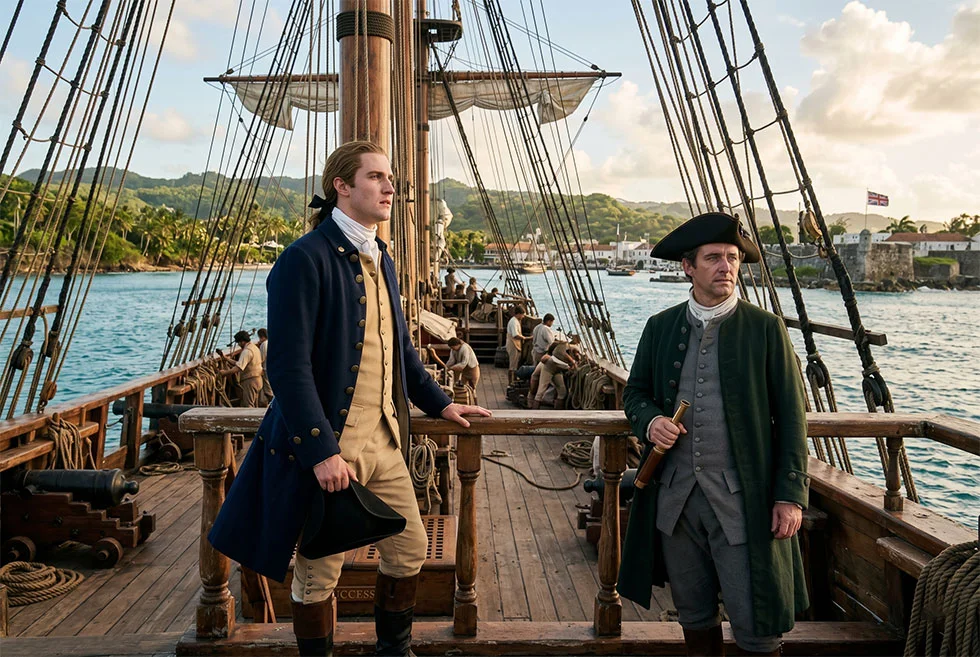
The Washington brothers likely traveled aboard a small colonial brigantine merchant vessel known as the Success. Historians suggest this is the most probable ship based on reconstructed shipping records from the Virginia–Barbados trade route. It was said to be commanded by Captain Jeremiah Cranston, measured roughly 40 tons, and carried a crew of about eight men.
The vessel likely departed from the Potomac region of colonial Virginia, operating within regular Atlantic trading routes between Virginia and Bridgetown. Its cargo reflects its commercial purpose rather than passenger comfort, carrying goods such as barrel staves, timber, corn, and preserved fish used in the Caribbean trade network.
Unlike modern passenger ships, the Success was a working cargo vessel operating in unpredictable Atlantic conditions.
Conditions were harsh:
- cramped sleeping quarters
- limited ventilation
- constant ship movement
- damp, crowded environments
For Lawrence Washington, illness would have made the journey even more physically demanding. Life below deck was shaped by heat, odor, and the constant motion of the Atlantic.
As one maritime historian noted: “Passengers boarded ships knowing there was always a real possibility they might never return home.”
How Long Did the Voyage to Barbados Take?
A typical crossing to Barbados lasted 6–8 weeks, depending on winds and storms. To understand George Washington’s experience, it helps to consider what it was like to sail on an 18th-century ship, where travel depended entirely on wind, weather, and the limits of wooden construction.
Travel was unpredictable. Delays were common due to:
- shifting wind patterns
- storms
- ocean currents
Unlike modern travel, there was no fixed schedule.
The journey also reflected colonial inequality. Long-distance travel was expensive and largely limited to wealthy families such as the Washingtons.
Days at sea passed through repetitive routines, maintenance, and long periods of boredom.
For younger travelers like George Washington, the experience was likely both physically demanding and mentally transformative. The Barbados Museum & Historical Society offers additional insight into how Barbados became a major center of trade and colonial activity during the 18th century.
Food, Water, and Illness at Sea
Ship provisions were basic:
- salted meat
- hardtack biscuits
- dried legumes
- cheese
- watered-down alcohol
Fresh food spoiled quickly, and stored water often deteriorated during long voyages.
Below-deck conditions were humid and unsanitary, with limited ventilation and persistent odors from wood, tar, and livestock storage.
Disease spreads easily in these environments. Smallpox, in particular, posed a serious risk.
During his time in Barbados, George Washington contracted smallpox, an illness that left lasting physical effects but also later contributed to immunity that influenced his military career.
As historian Eleanor Matthews observed: “Travel in the colonial Atlantic world shaped how people understood danger, empire, and survival.”
Who Else Traveled Across the Atlantic?
Atlantic ships carried a mix of:
- merchants
- sailors
- officials
- plantation owners
- indentured servants
- enslaved Africans (depending on trade routes)
Conditions varied sharply by status.
Even within the same vessel, social hierarchy shaped space, food access, and living conditions. Wealthier passengers had marginally better accommodations, while sailors performed demanding labor above deck.

Arriving in Bridgetown
After weeks at sea, arrival in Bridgetown would have been striking.
By the mid-18th century, it was a major British port moving sugar, rum, and goods across the Atlantic world.
For George Washington, Barbados revealed a scale of commerce and imperial power far beyond colonial Virginia.
Modern visitors can still explore this legacy through the UNESCO Historic Bridgetown and its Garrison designation, which highlights the city’s colonial and military significance.
Exploring George Washington’s Barbados Today
Visitors exploring George Washington House Barbados can experience one of Bridgetown’s most unique colonial-era attractions.
The restored property includes:
- preserved colonial rooms
- Maritime and Caribbean exhibits
- interpretation of Washington’s 1751 visit
- underground tunnel systems
For travelers interested in colonial history, the property offers valuable insight into the British Atlantic world Washington encountered upon arriving in Barbados.
“Learning about the actual voyage before visiting the house made everything feel more real,” said Karen Mitchell of Boston.
Why George Washington’s Voyage Still Matters
George Washington’s journey highlights:
- the risks of Atlantic travel
- Barbados’ role in the British Empire
- colonial maritime life
- the interconnected Atlantic world
Before becoming a historical figure, Washington was simply a young passenger facing the uncertainty of the Atlantic. George Washington’s journey to Barbados highlights the risks and realities of colonial-era sea travel.
Ultimately, what it was like to sail on an 18th-century ship is best understood not as a single experience, but as weeks defined by uncertainty, discomfort, and endurance at sea.
Book your tour to the George Washington House in Barbados today and sail through history. Click here or give us a call at (246) 228-5461.
Q&A Section
Q: Why did George Washington travel to Barbados?
A: George Washington traveled to Barbados in 1751 with his half-brother Lawrence, who sought treatment for tuberculosis in the island’s warm climate.
Q: How long did it take to sail to Barbados in the 1700s?
A: Most voyages to Barbados during the 18th century lasted between six and eight weeks, depending on weather and wind conditions.
Q: What were 18th-century sailing ships like?
A: Most ships were crowded merchant vessels with cramped sleeping quarters, limited food supplies, poor ventilation, and difficult living conditions during long Atlantic crossings.
Q: Did George Washington become sick in Barbados?
A: Yes. During his stay in Barbados, George Washington contracted smallpox but survived the illness.
Q: Can visitors explore George Washington’s connection to Barbados today?
A: Yes. Visitors can tour George Washington House in Bridgetown and learn about Washington’s visit and colonial life in 18th-century Barbados.